Before You Propose on a Mountaintop, Make Sure You Can Climb It.
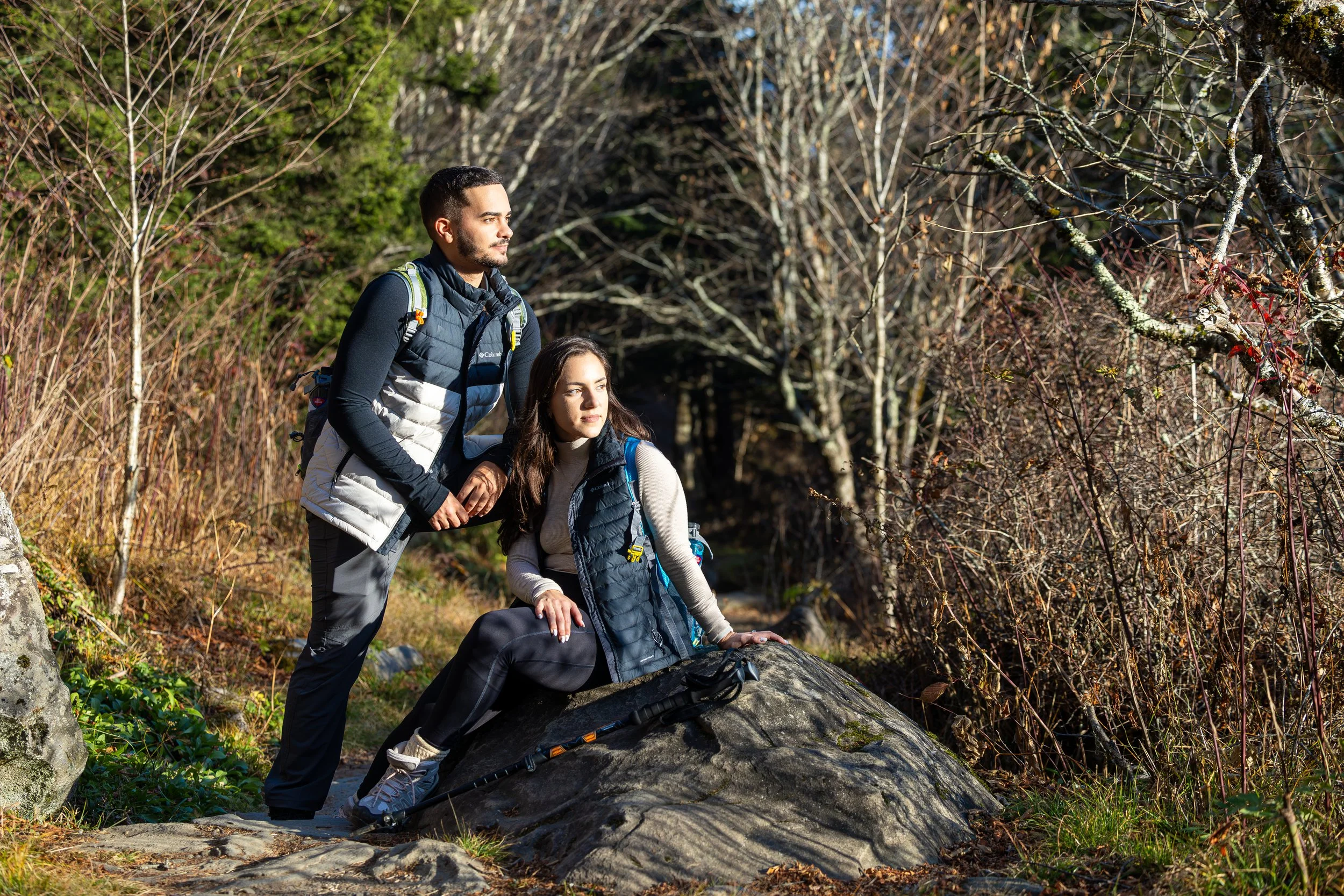
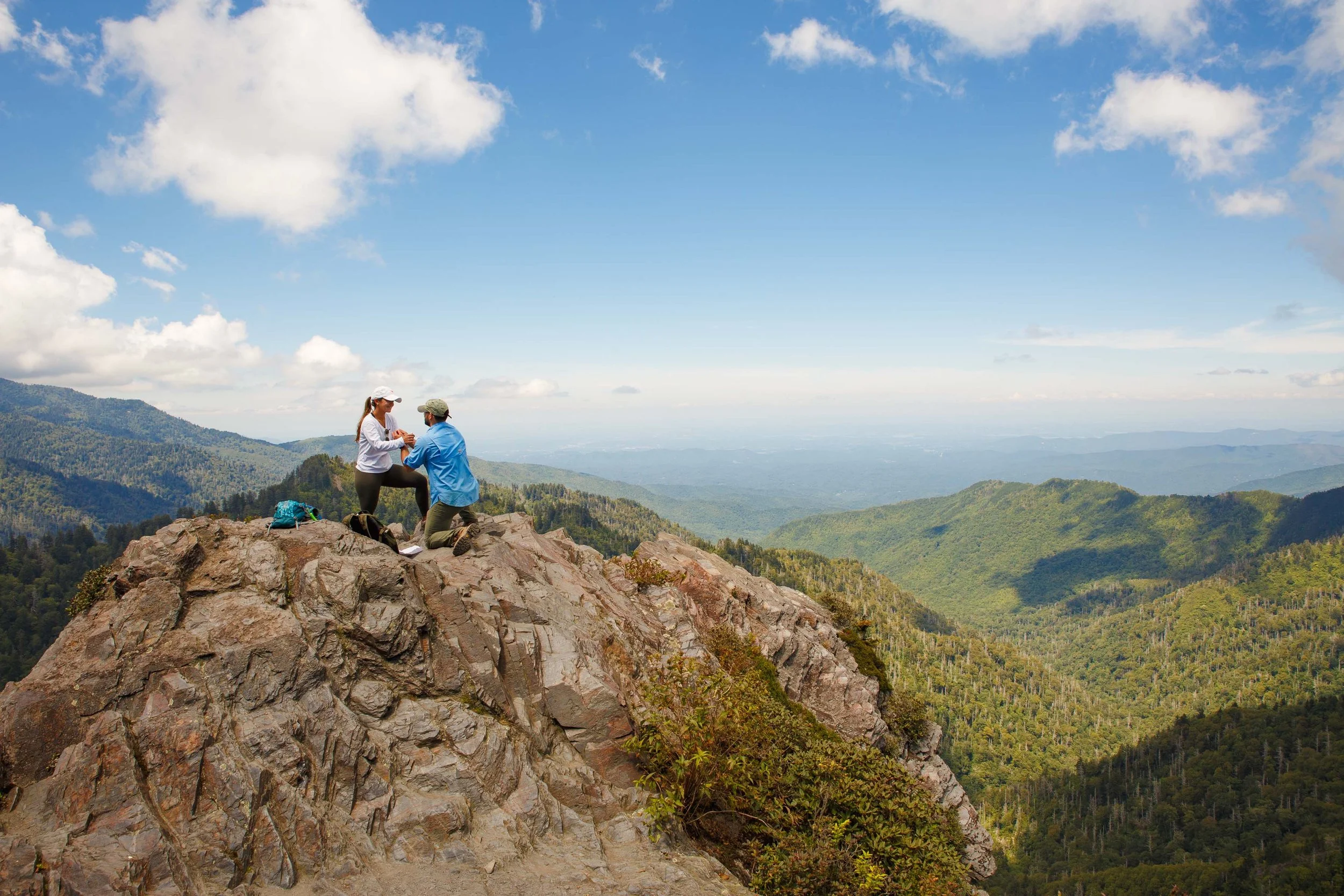
Photo done after a successful proposal at Andrews Bald (elev. 5,920 feet) in the Smokies
There is something undeniably romantic about proposing on top of a mountain.
You’ve seen the pictures. Mountains rolling away into the distance. Maybe a little mist hanging in the valleys. Your future fiancée standing there while you drop to one knee with nothing around you but the two of you and several hundred thousand acres of Great Smoky Mountains National Park.
Perfect.
There is just one small problem.
You have to get up there.
And contrary to what Instagram occasionally leads people to believe, there is not always a parking lot conveniently located six feet outside the photograph.
Can She Make It Up the Mountain? Heck, Can You?
If you are an avid hiker, none of this is news to you. You know your pace, you understand elevation gain, you own appropriate shoes, and you probably know exactly how much water you need for a six-mile hike.
This article isn't really for you.
This is for the guy whose usual mountain climbing takes place on a treadmill at the gym, but who suddenly has visions of becoming Jeremiah Johnson for an afternoon because wouldn't proposing from the top of a mountain be incredible?
Yes. It absolutely can be.
But first we need to figure out whether you—and the woman you are bringing along—will actually enjoy getting there.
Because in the Smokies, some of the biggest views, prettiest waterfalls and most secluded places require some effort.
Sometimes quite a bit of effort.
Not All Smoky Mountain Trails Are Created Equal
Very generally, I tend to think of Smokies trails in two categories.
The first are trails built along old roads and railroad beds, many dating from the logging days before Great Smoky Mountains National Park was established.
Little River Trail in Elkmont is a perfect example. It follows an old railroad bed and begins as a broad, relatively gentle trail along the river. Trails like this tend to be wider, often gravel-covered, and their elevation changes can be gradual. You are still hiking, but you aren't necessarily auditioning for Survivor: Gatlinburg Edition.
Then there are mountain trails.
These can be narrow. There can be rocks, roots, mud, stream crossings and blind turns. The trail can climb steadily—and sometimes brutally.
Chimney Tops is a good illustration. The National Park Service describes the trail as gaining more than 1,400 feet of elevation in about two miles. That's not a casual stroll after breakfast at the Pancake Pantry.
Knowing the mileage alone isn't enough. A three-mile hike with little elevation gain is very different from three miles that seem determined to introduce your lungs to your tonsils.
That is why choosing the right trail matters.
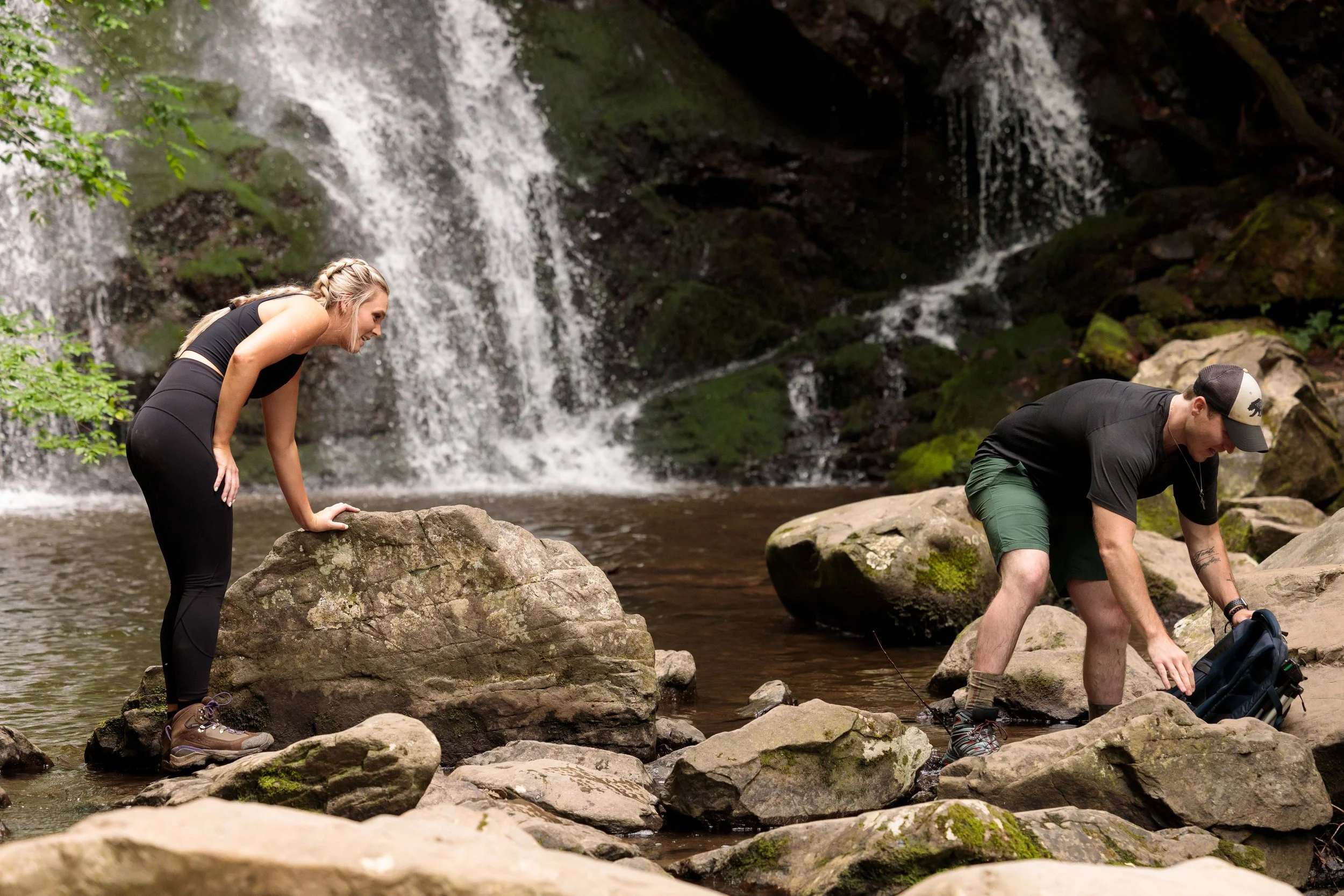
Readying for the proposal at Spruce Flats Falls
Why Hike for Your Proposal?
Because the payoff can be spectacular.
For starters, hiking can give you more privacy. Once you move away from roadside overlooks and parking areas, the crowds often thin considerably. You may still encounter other hikers—particularly on popular trails—but you're less likely to have a minivan unloading behind you just as you reach for the ring.
Then there's the setting.
Forests. Mountain streams. Waterfalls. Moss-covered rocks. Rhododendron tunnels. Sweeping mountain views.
The Smokies become a very different place when you leave the road behind.
And finally, there is the sense that you went somewhere for this moment. You didn't simply pull over, walk fifty yards and propose. The journey itself becomes part of the story.
Plus, you can skip the gym that day.
Trust me.
And Now for the Less Romantic Part
A hiking proposal requires a little more planning than driving to an overlook.
Weather matters—a lot.
On a hot, humid summer afternoon, a strenuous climb can leave both of you looking considerably less like the couple in the engagement advertisement you had envisioned.
More importantly, mountain weather can change quickly. Rain can turn rocks and roots slick. Streams can rise. Thunderstorms can develop. Conditions at higher elevations can be very different from those where you started.
This is where being willing to change plans becomes important. The National Park Service specifically recommends checking weather and trail conditions before hiking and having a Plan B when conditions aren't right.
And remember: this is a national park, not a theme park.
-
Maybe she can. I recently had a woman hike to Arch Rock in a dress and flip-flops. She is not the standard by which I would judge ability
You are entering a wilderness area.
There are bears.
Usually they want considerably less to do with you than you want to do with them, but they are wild animals and need to be treated accordingly. Bears also aren't the only variable. There can be downed trees, swollen streams, washed-out sections of trail and other surprises courtesy of Mother Nature.
Bring the Right Stuff
This is not the time for brand-new loafers because they look good with your proposal outfit.
Wear proper hiking shoes or boots. Depending upon the trail and your comfort level, hiking poles can be enormously helpful, particularly when coming downhill.
-
That’s an old hiker adage. Wet cotton does not provide any insulation and does not wick moisture away from you. Even if you are on a short, easy trail where sneakers are adequate, do yourself a favor - wear wool socks. Sure, maybe your feet will get warm but you know what they likely won’t get? Blisters.
Bring a backpack.
You'll want water, snacks, rain protection and other basic hiking necessities. Depending on how far you're going and the time of day, that should include things such as a small first-aid kit and a real headlamp.
And, of course, the ring.
Put that somewhere secure and accessible. This is not the day to discover that the tiny velvet box bounced out somewhere around mile 1.7.
One other thing people accustomed to city life sometimes don't consider: your cellphone may not work.
In much of Great Smoky Mountains National Park, service is extremely limited or nonexistent. The National Park Service recommends downloading maps in advance and reminds hikers that in an emergency, help may be hours away.
That doesn't mean you should be afraid to hike.
It means you should be prepared to hike.
You Don't Have to Become a Mountain Man Overnight
Most of these concerns can be handled simply by choosing wisely.
Pick a trail appropriate for your fitness level. Watch the weather. Start at a sensible time. Carry what you need. Consider a popular trail if you are uncomfortable being deep in the backcountry alone. And don't be afraid to turn around if conditions aren't what you expected.
Most importantly, don't choose a proposal location because somebody posted one gorgeous photograph from there.
Choose it because the location—and the journey required to reach it—fits the two of you.
That's where I can help.
I spend a lot of time in the Smokies, and I can give you the skinny on different trails: how difficult they really are, what the terrain is like, how much climbing is involved, what you can expect when you get there and whether there's another location that gives you the look you want without requiring you to suddenly become Sir Edmund Hillary.
A mountaintop proposal can be spectacular.
We just need to make sure you both still have enough breath left when it's time for you to ask the question.